

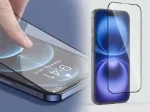
Glass for Mobile Screen Protection: Smartphones have become the most significant aspect of our everyday lives, and everyone is concerned about their security.
Since smartphones are now an essential part of our everyday lives, everyone is worried about their security. People pick toughened glass because they are afraid of breaking or damaging the screen. However, there are now many other tempered glass labels available on the market, such as 2D, 3D, 5D, 9D, and 11D, which frequently leave consumers perplexed about the distinctions and the best option.
Let’s start by discussing 2D tempered glass. The simplest and least expensive choice is this one. It leaves the borders of the screen uncovered and simply covers the flat portion. This is effective if your phone has a flat screen, but it doesn’t adequately protect the corners and can chip off quickly on curved screens.

Let’s now discuss 3D tempered glass. It is made especially for smartphones with curved screens. Because of its softly curved edges, it can better cover the entire screen and safeguard the display. Additionally, it makes the phone feel more expensive, and the seamless fit enhances the user experience.
11D tempered glass is promoted as being robust and cutting edge. Terms like 4D, 5D, 9D, and 11D are actually just marketing gimmicks. In order to persuade consumers that the stronger the glass, the larger the “D,” companies employ these terms. The dimensions are technically restricted to just three. In other words, glass that is marketed as 11D is actually 2.5D or 3D.
An “H,” such as 9H hardness, indicates the real hardness scale. A 9H rating indicates that the glass can tolerate impacts and will be extremely resistant against scratches from commonplace objects like coins or keys.
What is the best tempered glass, then? 2D or 9H tempered glass will work well if your phone has a flat screen. However, 3D or 11D tempered glass is preferable if your phone has a curved display. Selecting robust and long-lasting glass not only shields the screen but also guarantees responsive touch and regulates the phone’s temperature.
To put it simply, you should choose tempered glass based on its hardness grade and display type rather than becoming overly confused by the “D” label. Only then can the screen of your phone be long-lastingly protected.
Read More: Delhi University Hiring Professors From October 7

|
|
 Facebook Page Facebook Page |
Click Here |
| Twitter |
Click Here |
| Instagram |
Click Here |