


Google Gemini Nano is made to instantly analyze potentially dangerous websites, giving consumers more protection—even from schemes that haven’t been observed before.
Enhancement of its AI-powered protection
Google has unveiled a major enhancement of its AI-powered protection on Chrome, Gemini Nano, an on-device large language model that will assist in more effectively battling online scams, as part of an effort to improve online safety. The technology is being rolled out on desktop platforms and, progressively, Android handsets as well, according to the company’s Thursday update.

Google notes that Gemini Nano is now integrated into Chrome’s Enhanced Protection mode within Safe Browsing to provide an extra layer of protection against frauds. In comparison to the Standard Protection setting, the business emphasizes that this mode already provides twice as much protection against phishing and other online risks.
The AI model is already protecting users against a frequently exploited vector: remote tech support frauds. According to Google, in subsequent upgrades, the Gemini Nano will expand the kinds of scams it can catch and apply similar safeguards to Android devices.

The new AI-driven warning systems on Android, in addition to the desktop deployment, are designed to shield consumers from deceptive or harmful website notifications. Google pointed out that push notifications, which can trick consumers long after they’ve left a page, frequently extend scam dangers beyond the immediate site.
What has Google said?
“Gemini Nano’s LLM is perfect for this use because of its ability to distill the varied, complex nature of websites, helping us adapt to new scam tactics more quickly,” the company stated in a blog post. Gemini Nano gives customers more protection, even against scams that haven’t been spotted yet, by instantly analyzing potentially dangerous websites using on-device data processing.

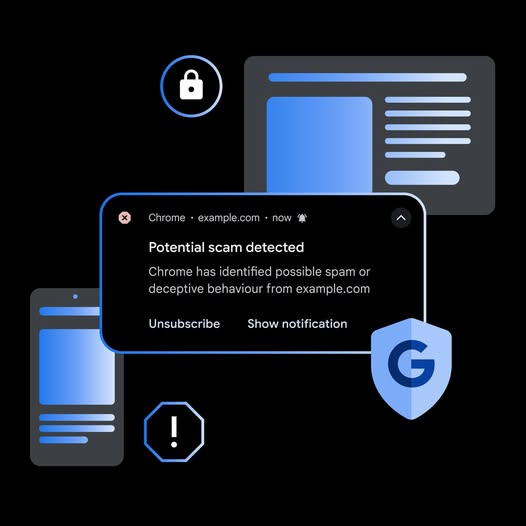
When a notice is thought to be “malicious, spammy, or misleading notifications,” Chrome’s on-device machine learning model will now identify it as a “possible scam” and send out an alert. Additionally, users will have the option to read the restricted content or unsubscribe. Users still have the option to accept all upcoming notifications from a site if they think it was identified mistakenly.
Google emphasized the wider role of AI
Additionally, Google emphasized the wider role AI plays in combating online fraud, especially in Search. According to the corporation, its AI algorithms have improved their ability to identify scam content by 20 times, currently detecting and blocking hundreds of millions of scam-related results per day.
The impersonation of airline customer support representatives has been a prominent fraud trend. Users are much less likely to come across phony support phone numbers in search results because to Google’s stated 80% decrease in such fraudulent behavior.
The business’s most recent announcements highlight a deliberate drive towards on-device AI solutions that provide adaptive, real-time protection, utilizing Gemini Nano’s processing power to keep ahead of changing cyberthreats.
Read More: EPFO to Speed Up Higher Pension Payouts by Year-End

|
|
 Facebook Page Facebook Page |
Click Here |
| Twitter |
Click Here |
| Instagram |
Click Here |